Spain hosts a range of aquarium and zoological facilities distributed across its major cities and tourist regions. These venues vary considerably in scale, approach and the type of collections they maintain. Several operate as large-scale multi-attraction complexes, while others are more focused urban institutions integrated into parks or waterfronts. This reference covers the principal venues currently in operation.

L’Oceanogràfic, Valencia, part of the Cité des Arts et des Sciences complex. — Wikimedia Commons (CC)
L'Oceanogràfic, Valencia
L'Oceanogràfic is the largest aquarium in Europe by total water volume and forms part of Valencia's Cité des Arts et des Sciences (City of Arts and Sciences) complex. The facility was designed by Félix Candela and opened in 2003. It is organised around nine marine ecosystems, each housed in separate structures connected by an underwater passage and surrounding gardens.
Ecosystems and Exhibits
The nine zones represent: the Mediterranean Sea, Oceans, Arctic/Antarctic regions, Tropical Seas, the Red Sea, Temperate Seas, the Amazon, an Islands habitat, and a Wetlands zone. The Oceans tunnel, a 70-metre walk-through acrylic tunnel, provides proximity to sand tiger sharks, rays and large pelagic species. The Arctic area houses beluga whales, one of the aquarium's most recognisable resident species.

Beluga whale at L’Oceanogràfic Valencia. — Wikimedia Commons (CC)
Dolphin and Sea Lion Shows
The Dolphinarium at L'Oceanogràfic is one of the largest covered dolphin facilities in Europe. Dolphin and sea lion presentations are scheduled throughout the day at set times; advance booking is recommended during peak periods. The presentations are framed around educational content relating to marine mammal behaviour and conservation research.
L'Oceanogràfic — Key Facts
- Location: Carrer de l'Oceanogràfic 5, 46013 Valencia
- Access: Tram line 4 or 6 to La Marina; several bus routes from city centre
- Official website: oceanografic.org
- Combined tickets: Available with L'Hemísfèric and Museu de les Ciències within the same complex
- Facilities: Full accessibility, pushchair access, on-site restaurants, picnic areas
Barcelona Aquarium (Aquàrium de Barcelona)
The Barcelona Aquarium is located in Port Vell, the city's historic harbour, and is accessible on foot from the Barceloneta beach area or by metro to Barceloneta station. The facility opened in 1995 and centres on a Mediterranean marine collection, with a principal highlight being its 80-metre glass tunnel running through the main shark tank.
Collections and Layout
The Mediterranean section is the most expansive area, covering the range of species found in the Balearic and Catalan sea zones. The Oceanari, the building's central and largest tank, houses five species of shark alongside rays, sea turtles and a variety of large bony fish. A separate Planeta Aqua zone is dedicated to tropical species and provides a contrast with the cooler Mediterranean exhibits.
Explora!, a dedicated interactive area for children, includes touch tanks for rays and starfish and a range of hands-on educational exhibits. The aquarium is positioned at the commercial end of the spectrum among Barcelona's family venues; it is compact relative to L'Oceanogràfic but highly accessible given its central location.
Barcelona Aquarium — Key Facts
- Location: Moll d'Espanya del Port Vell s/n, 08039 Barcelona
- Access: Metro L4 to Barceloneta; walking distance from Rambla del Mar
- Official website: aquariumbcn.com
- Note: Booking in advance is advisable during summer and Easter periods
Barcelona Zoo (Zoo de Barcelona)
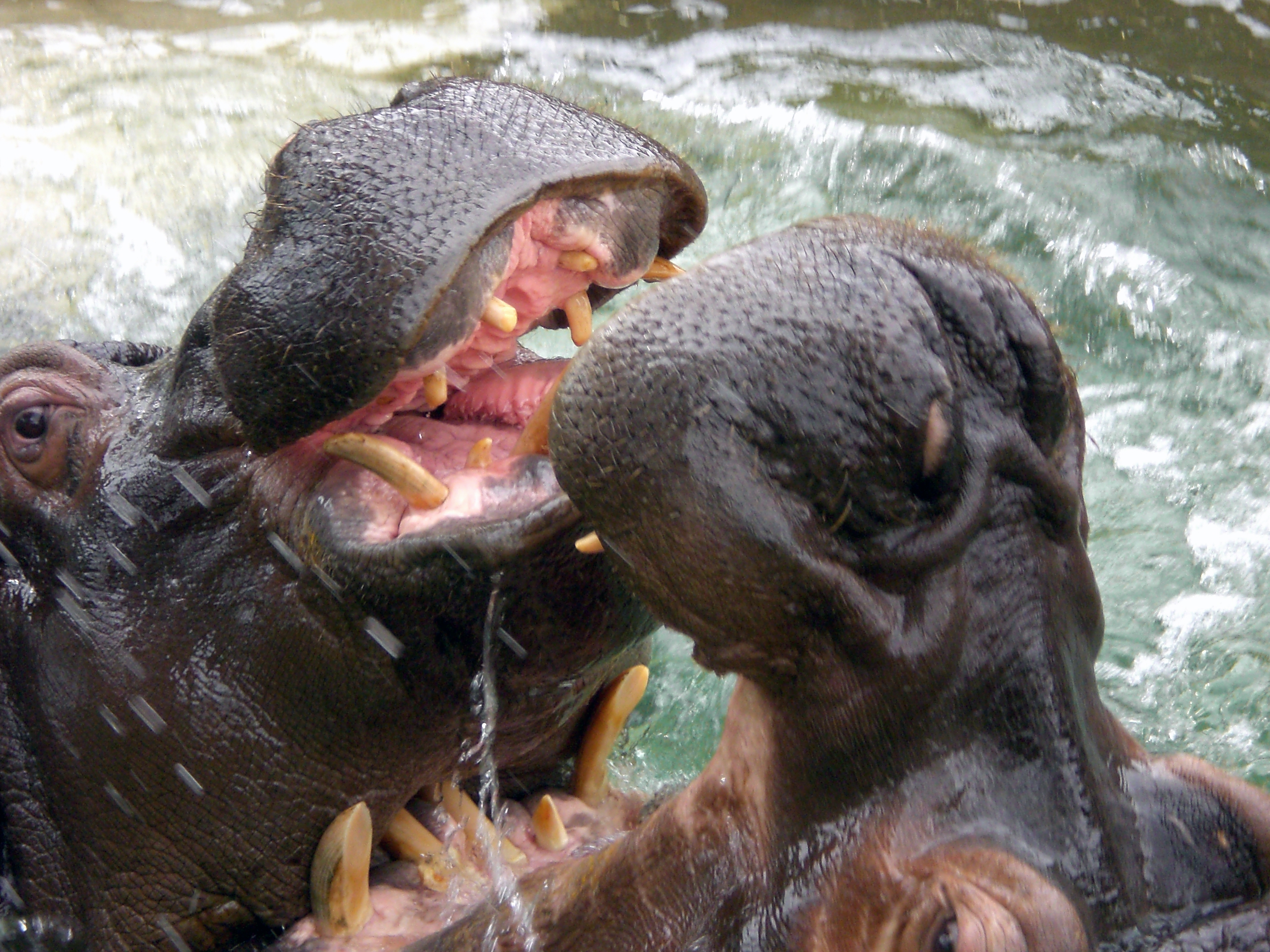
Hippopotamus at Barcelona Zoo, Parc de la Ciutadella. — Wikimedia Commons (CC)
Barcelona Zoo occupies part of the Parc de la Ciutadella, the large urban park adjacent to the Born neighbourhood, and has been in continuous operation since 1892. The park's urban integration and compact footprint make it among the most accessible major zoos in Spain, reachable by metro (Arc de Triomf on Line 1 or Barceloneta on Line 4) or on foot from the city centre.
Collection and Design
The zoo's collection includes mammals, birds, reptiles and amphibians, with a notable gorilla colony and a strong African savanna section. The Reptile House is among the older structures on site and contains a varied collection of chelonians, snakes and monitor lizards. The zoo has progressively updated its enclosure designs toward more naturalistic environments, though some older infrastructure remains.
Barcelona Zoo has a particular historical significance as the former home of Snowflake (Copito de Nieve), an albino gorilla that lived at the facility from 1966 until his death in 2003, and who became one of the most recognisable animals in Spain during that period. The zoo maintains a small memorial to him.
Barcelona Zoo — Key Facts
- Location: Parc de la Ciutadella s/n, 08003 Barcelona
- Access: Metro L1 Arc de Triomf or L4 Barceloneta
- Official website: zoo.barcelona.cat
- Combined options: Can be combined with a visit to the Parc de la Ciutadella and the Museu de Ciències Naturals (Museu Blau)
Bioparc Valencia
Bioparc Valencia opened in 2008 and operates on a design concept it describes as “fauna in nature”, with the aim of creating immersive environments that minimise visible barriers between visitors and animals. The park is divided into four African-themed zones: Sahel-Sudan, Equatorial Africa, Flooded Forests of Madagascar, and African Savanna.
The Madagascar zone is notable for housing lemurs and other Malagasy species in an environment designed to reflect their native habitat. The Savanna area accommodates giraffes, elephants, rhinoceroses, hippopotami and zebra in a shared viewing landscape. Bioparc is positioned in the Nou d'Octubre area of Valencia and accessible by metro (lines 1, 2 and 9 to Nou d'Octubre).
Bioparc Valencia — Key Facts
- Location: Avinguda del Pio Baroja 3, 46015 Valencia
- Access: Metro lines 1, 2, 9 to Nou d'Octubre
- Official website: bioparcvalencia.es
- Note: Feeding times and ranger talks are scheduled across the day; timetables available at the entrance
Zoo Aquarium Madrid
The Zoo Aquarium Madrid is one of Spain's largest combined zoo and aquarium facilities. It is located within the Casa de Campo park to the west of the city centre and is reachable by metro (Batán, Line 10) or by the Teleférico aerial cable car from the Rosales district. The facility houses a zoo collection alongside a dolphinarium, bird park, aquarium and a dedicated reptile building.
The zoo is known for its giant panda programme; it has maintained giant pandas on loan from China for an extended period, making it one of only a limited number of European facilities to house the species. The aquarium section is compact relative to L'Oceanogràfic but covers a range of freshwater and marine environments, including a touch pool for children.
Zoo Aquarium Madrid — Key Facts
- Location: Casa de Campo s/n, 28011 Madrid
- Access: Metro L10 to Batán; Teleférico from Paseo del Pintor Rosales
- Official website: zoomadrid.com
- Combined options: Same park area as Parque de Atracciones Madrid
Faunia, Madrid
Faunia is an ecological park in southeast Madrid designed around biome-based exhibits rather than traditional zoo enclosures. Its zones represent different global ecosystems including polar regions, tropical rainforest, African grasslands and wetlands. The facility includes an artificial Antarctic environment maintained at sub-zero temperatures, housing king and gentoo penguins. There is also a Nocturnal Zoo section, which is operational after dark and showcases species normally difficult to observe.
Faunia — Key Facts
- Location: Calle de Av. de las Comunidades 28, 28032 Madrid
- Access: Metro L9 to Valdebernardo; bus lines from Conde de Casal
- Official website: faunia.es
Planning Notes for Aquarium and Zoo Visits
Visit Lengths
Major facilities such as L'Oceanogràfic and the Zoo Aquarium Madrid typically require a full day to visit thoroughly. Smaller venues like Barcelona Aquarium can be covered in two to three hours. Many families find it practical to combine adjacent venues: for example, the Barcelona Zoo with the Museu de Ciències Naturals, or L'Oceanogràfic with the Museu de les Ciències in Valencia's Cité des Arts.
Animal-Viewing Conditions
Activity levels among zoo and aquarium animals tend to be highest during morning hours, before the heat of the day reduces movement in many species. At marine facilities, feeding sessions and diver shows in tanks provide predictable periods of heightened activity. Schedules for these events are typically posted at venue entrances and on official websites.